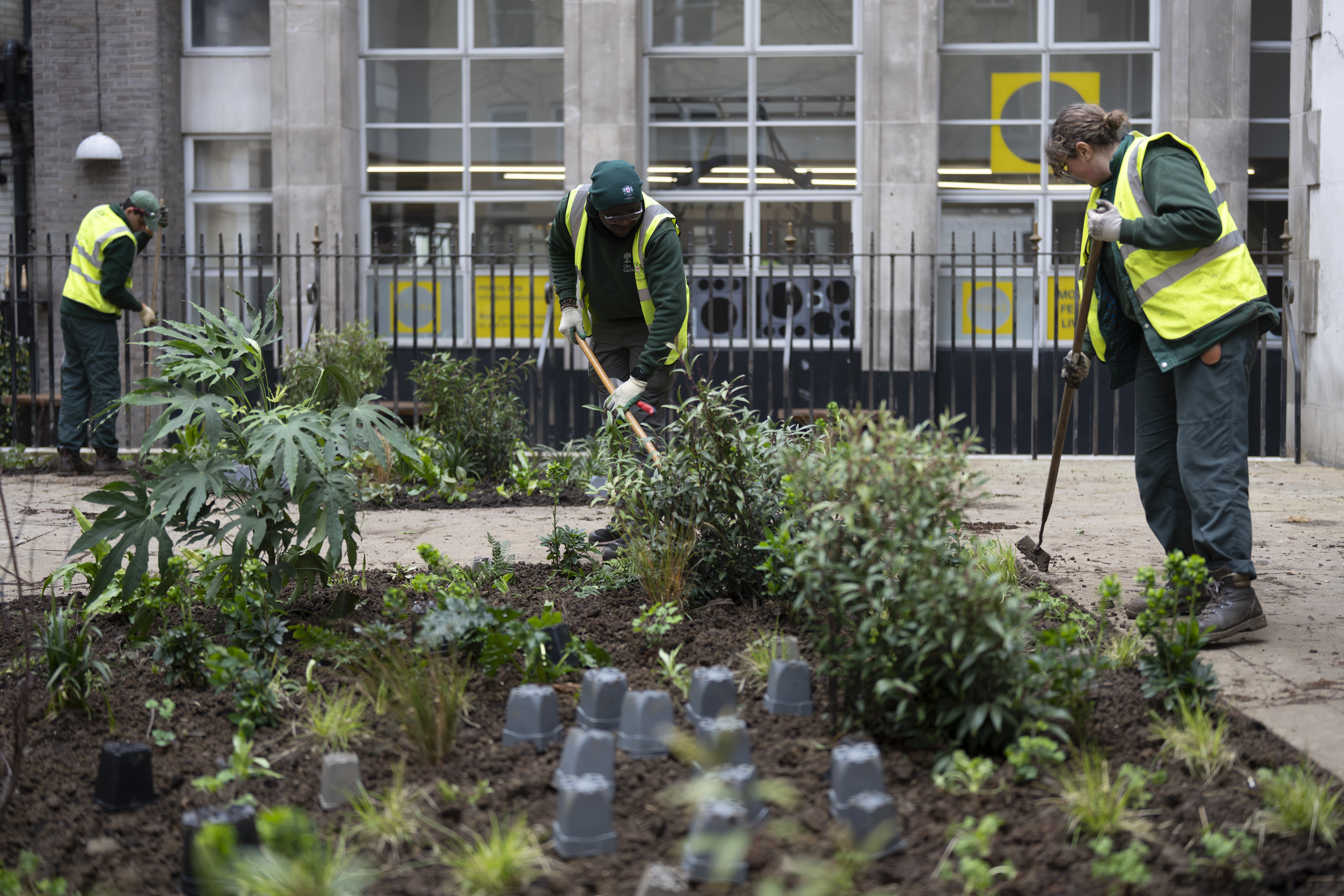
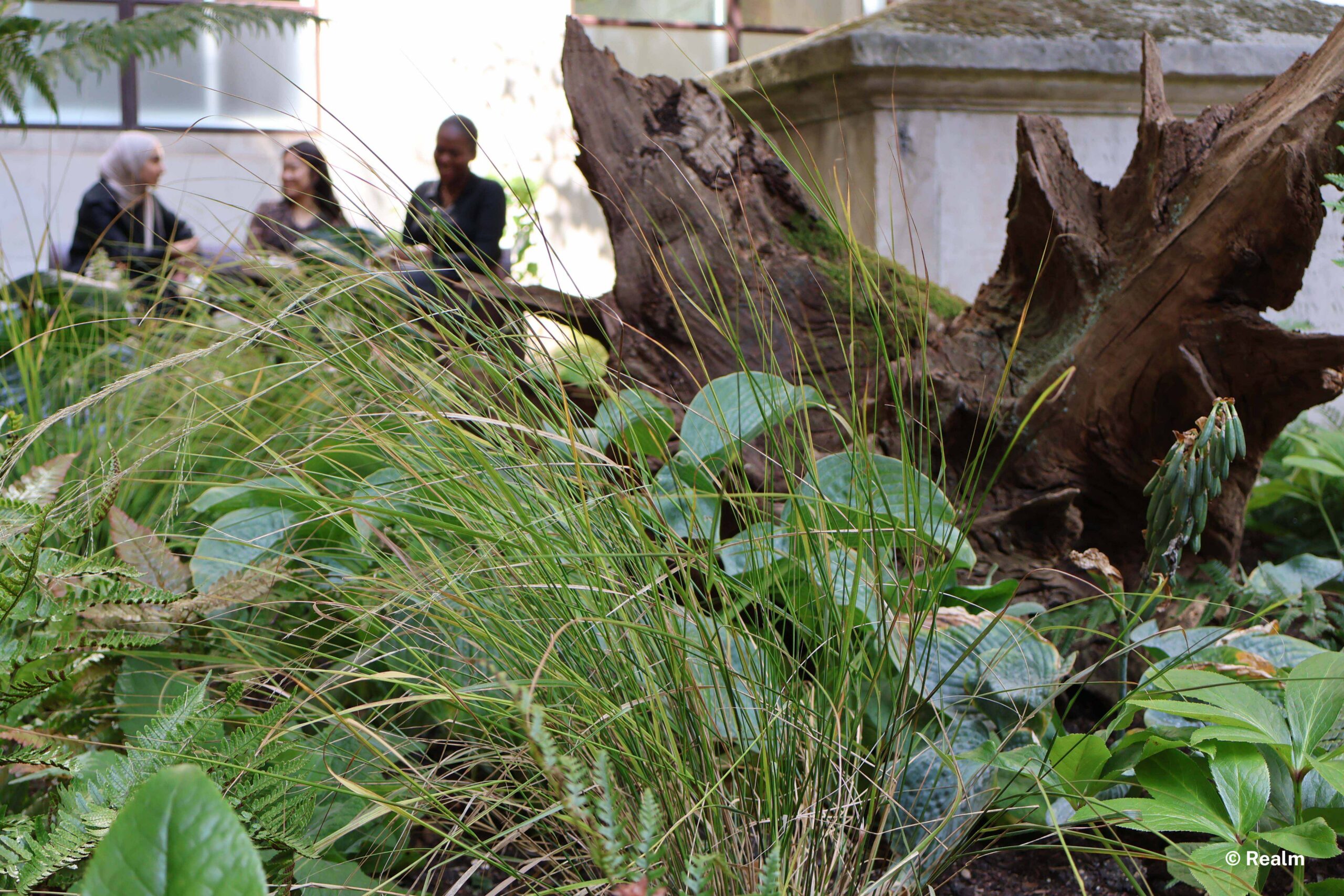
Exciting enhancements are underway at Fen Court and Fenchurch Street Station Plaza in partnership with the City of London Corporation and landscape architects Realm.

Key features include:

  • Enhanced biodiversity with planting designed to support a variety of wildlife
  • Year-round visual interest through thoughtful, seasonal landscaping
  • Improved seating with new timber cladding and additional places to rest
  • Educational signage highlighting plant species, project goals, and environmental benefits

These improvements aim to create greener and more welcoming spaces for all.

The planting scheme has been carefully developed in response to the varied microclimates of George Yard and the surrounding lanes, with particular attention paid to sunlight levels, moisture availability, wind exposure, and soil conditions. Plant species have been selected not only for their visual and seasonal interest but also for their ecological contributions; supporting pollinators, improving biodiversity, and offering resilience through changing climatic conditions.

Microclimate Responsiveness

The planting species reflects the particular conditions of each site, creating distinct communities that thrive within their specific environments. Species such as the Copper Shield Fern (Dryopteris erythrosora) demonstrate remarkable adaptability, thriving in both sun and shade, moist and dry conditions. This makes them integral to knitting the planting scheme together while providing year-round copper-bronze foliage colour. Barrenwort (Epimedium × perralchicum ‘Fröhnleiten’) has been strategically placed in the driest, most challenging spots, as this hardy perennial can cope with extreme drought conditions once established. This is an increasingly important factor as we experience more frequent periods of prolonged summer drought. Its heart-shaped leaves also provide excellent ground cover, suppressing weeds naturally.

Pollinator and Wildlife

Value Many of the key species included in the design are recognised for their exceptional nectar or pollen value, supporting a diverse range of pollinators including solitary bees, honeybees, hoverflies, and butterflies. Extended flowering periods were prioritised to ensure continuous foraging opportunities from early spring through to late autumn. Pincushion flower (Astrantia major ‘Burgundy Manor’) serves as a pollinator magnet, particularly valued by hoverflies whose larvae help control aphid populations, while its unique papery bracts extend the display long after the flowers fade. Sweet box (Sarcococca confusa) provides intensely fragrant winter blooms that attract early-emerging bees on mild winter days, followed by glossy black berries for birds. Hellebores (Helleborus ‘Harvington Smokey Blues’) offer crucial early nectar when few other plants are flowering, with their distinctive slate-blue petals actually being sepals that persist for months. Snowdrops (Galanthus nivalis) have co-evolved specifically with early bees, their drooping flowers creating a perfect landing platform while protecting pollen from winter rain.

Additional Attributes

Beyond their ecological and horticultural merits, many of the chosen plants offer remarkable traits that enhance the scheme’s year-round appeal. Mahonia provides architectural winter structure with its bold, holly-like foliage and produces highly scented winter flowers, followed by grape-like clusters of berries. Several geranium species contribute aromatic foliage that releases fragrance when brushed against, while their ability to flower repeatedly throughout the growing season makes them invaluable workhorses. Many selections also provide crucial winter habitat. The spent stems of perennials shelter beneficial insects, while evergreen shrubs offer roosting sites for small birds. The palette is intentionally dynamic, balancing proven resilience with refined character to deliver a planting scheme that is both beautiful and functionally sustainable for decades to come.